Progressive Web Applications: The Pros and The Controversies

I am a web developer working at Majisti Inc. - a JAMstack web development company
Websites and apps have been in a complicated relationship for years, with websites feeling left out in the cold and apps hogging all the attention. Then, Progressive Web Apps (PWAs) arrived on the scene, ready to shake things up and bring harmony to this digital love affair.
In this article, we will explore the world of PWAs, where websites and apps decide to tie the knot and create a seamless, engaging experience for users.
Understanding PWA
A Progressive Web App (PWA) is primarily a website rather than a traditional application. Unlike apps that require compilation into specific languages, a PWA is built using web technologies and remains a website at its core.
However, a Progressive Web App (PWA) goes beyond being a conventional website. It embraces the characteristics of an app while being built with web technologies. While a PWA is fundamentally a website, it strives to provide a seamless app-like experience.
PWAs rely on a specific architecture to deliver their unique capabilities:
1.Service Workers
Service workers are a key component of PWAs, acting as programmable proxies between the PWA and the network. They enable background processes, caching of assets, and push notifications, allowing PWAs to function offline and deliver real-time updates.
2.App Shell Model
PWAs employ the app shell model, which separates the user interface (UI) from the data, allowing for quick and responsive loading. The app shell, consisting of essential UI elements, is cached locally, while dynamic content is fetched from the network.
3.Web APIs
PWAs can access various web APIs to interact with device capabilities such as camera, geolocation, and even sensors. Although PWAs have limited access compared to native apps, the available APIs provide enhanced functionality and user engagement.
Benefits of PWA
1.No App Store, No Problem
Progressive Web Apps (PWAs) provide the benefit of bypassing the app store approval process. Users can access and add PWAs directly from a website, eliminating the need for tedious app store approvals. This offers advantages such as simplified distribution, faster updates, lower distribution costs, broader reach, improved user experience, discoverability through search engines, and space/resource efficiency. PWAs provide developers with more control and users with a convenient and accessible way to install and use the app.
2.Instant Updates, Zero Moderation
In the context of traditional mobile apps, when developers want to release an update or a new version of the app, they typically have to go through an app store's moderation process. This process involves reviewing the app's code, functionality, and adherence to the app store's guidelines before the update is approved and made available to users.
On the other hand, PWAs operate differently. They are web applications that leverage modern web technologies to provide a more app-like experience to users. When it comes to updates, PWAs bypass the traditional app store moderation process. Instead, updates to a PWA can be instantly deployed to users without any need for moderation.
4.Wallet-Friendly
PWAs offer a wallet-friendly solution by leveraging web technologies and a single codebase to reduce development costs. With PWAs, businesses can allocate resources more efficiently and avoid the expenses associated with developing native apps for multiple platforms. Maintenance costs are also lower, as updates can be applied across all platforms simultaneously. Additionally, PWAs bypass app store fees, making them a cost-effective choice for organizations while still providing a high-quality user experience.
5.Pushing the Limits with Notifications
With push notifications, PWAs enable businesses to go beyond the traditional boundaries and engage users effectively. These notifications allow for timely communication, updates, and offers, similar to native apps. By leveraging push notifications, businesses can proactively keep users informed, nurture customer relationships, and drive user retention.
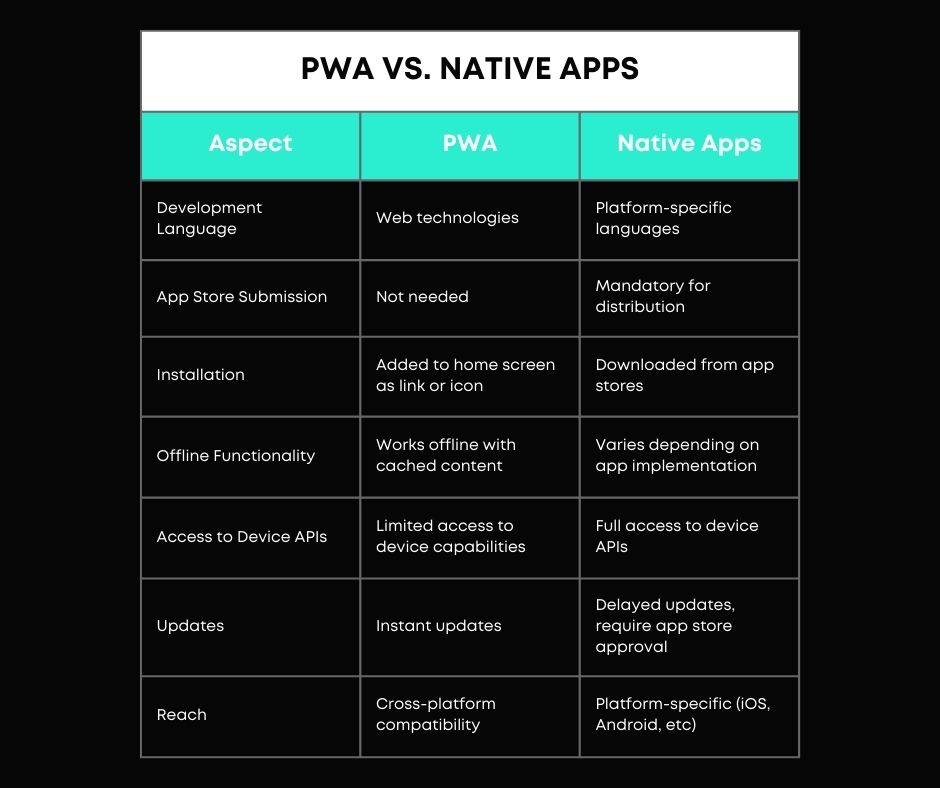
To provide a comprehensive perspective, let's compare PWAs and native apps using a table:
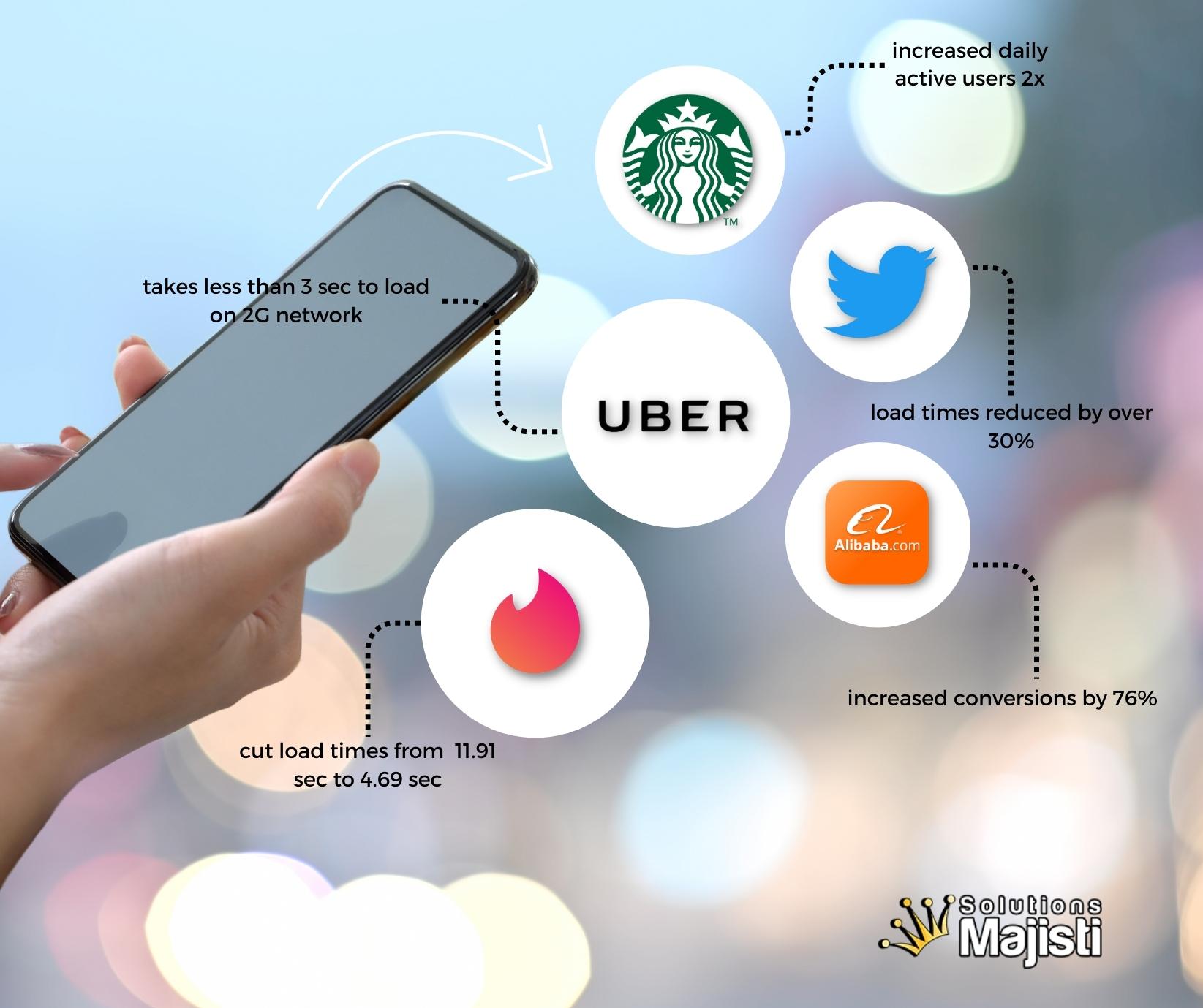
Several prominent companies have embraced PWAs and achieved remarkable results. Here are some notable examples:
PWA Controversies
While PWAs offer numerous advantages, there are some controversies and challenges surrounding their adoption:
1.Restricted Functionality
One of the key controversies surrounding PWAs is their limited access to certain device capabilities and APIs. While PWAs offer a wide range of functionalities, they cannot access certain native features like accessing calendars, contacts, or intercepting calls or SMS. This limitation may affect the overall user experience, especially for applications that heavily rely on these functionalities. However, the web standards are continuously evolving, and with time, PWAs may gain access to more device capabilities.
2.Battery Consumption
PWAs, being web-based applications, run within web browsers. As a result, they may consume slightly more battery compared to native apps that are optimized for specific platforms. The additional processes and resource requirements of PWAs within the browser environment can have a minor impact on battery life. However, advancements in web technologies and optimization techniques are continually improving the power efficiency of PWAs.
3.App Store Dependencies
While PWAs offer the advantage of bypassing app stores for installation, some controversy arises from their lack of visibility within app stores. The prominence and discoverability of apps within app stores play a significant role in attracting users and building trust. As PWAs are installed directly from websites, they may not receive the same level of exposure or recognition as native apps listed in app stores. However, this issue can be mitigated by effective marketing strategies and promoting the PWA installation process to users.
But now, the question arises: Will PWAs truly revolutionize the way we interact with the digital world? Can they bridge the gap between websites and apps, and usher in a new era of harmony and user engagement?