The Internet World before Search Engines and the Web

I am a web developer working at Majisti Inc. - a JAMstack web development company
What was the Internet like before search engines and the World Wide Web?
Today, it's hard to imagine the Internet without search engines and the World Wide Web, but it wasn't always that way. The internet of the 1980s and early 1990s was a very different place, with fewer users, slower connections, and fewer options for exploring and interacting with online content. In this article, we'll take a look at some of the technologies and services that were popular in the pre-web era of the internet.
IRC Chatrooms
IRC (Internet Relay Chat) was one of the earliest forms of online chat, dating back to the late 1980s. IRC chatrooms were organized into channels, each with its own name and topic, and users could join these channels to chat with others who shared their interests. IRC was often used for real-time discussions about technology, news, and other topics, and it provided a way for people to connect with others from around the world.
FTP
FTP (File Transfer Protocol) was one of the primary ways to share files online before the web. FTP servers allowed users to upload and download files, such as software, music, and documents, from remote servers. FTP was widely used by computer enthusiasts, software developers, and musicians to share their work with others, and it remains in use today for certain types of file transfers.
Gopher
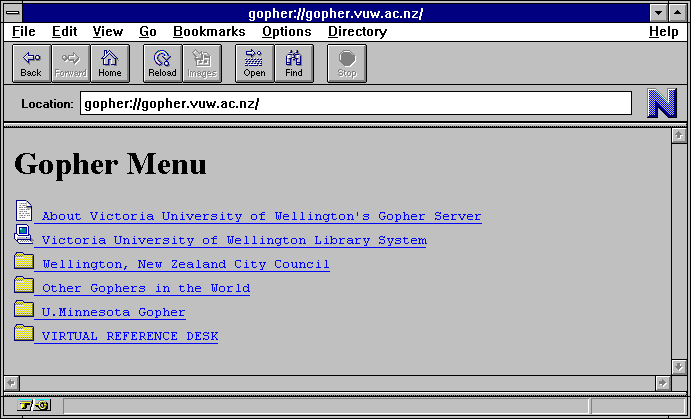
Gopher was a text-based protocol for accessing and navigating online content, similar to the web but with a simpler interface. Gopher was created in the early 1990s, and it quickly became popular for accessing information on academic and scientific servers. Gopher menus allowed users to browse and select from a hierarchical list of options, and many early internet users preferred Gopher to the Web for its simplicity and speed.
Usenet
Usenet was one of the earliest forms of online communities, with a history dating back to the late 1970s. It was a decentralized network of discussion forums, where users could post messages and reply to others on a variety of topics. Unlike modern social media, Usenet was not owned by any one company or organization, and no algorithms were controlling what content users saw. Instead, users subscribed to individual newsgroups based on their interests, and the discussions were moderated by volunteers.
The pre-web era of the internet was a time of experimentation and innovation, with many different technologies and services vying for users' attention. While search engines and the World Wide Web have come to dominate the online landscape, the legacy of early internet technologies like IRC, FTP, Gopher, and MUDs can still be seen in the way we interact with online content today.